


back to main menu | to the history page
������� ����� ��� �������� �������� �IV ��.
Bakota (flooded by the Dnister waterkeep)
Translated by students of Kyiv avia institute
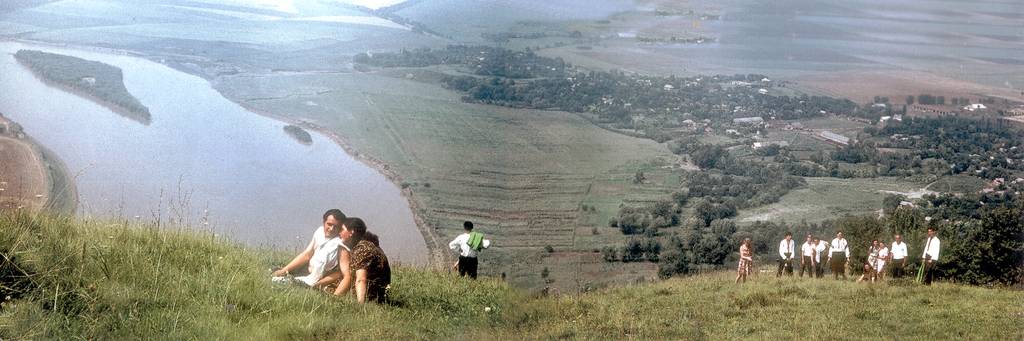
So here we are on the top of the White mountain, from where a wonderful landscape is opened. But down here, under waters of storage pool, till 1981 year, there was the Bakota village. It is cradle of history of our edge. There are two versions of decoding of this name:
1) "Bakota - "bokota" is piece of bread" (rum.)
2) "Bakota is the desired, wonderful place" ("ba" is prefix,
root of "kot" is desired.)
Most research workers support the second version. Bakota as city was the capital of Dnister Ponyzzia (Lowland) at the ղ� - ղ�� century, the scopes of which from the south was Dnister, from the north - the line Bar - Solobkivtsy - Gusatin. It is part of future Podillia, between the South Bug and Dnister. Lands of Middle Podnistrovia at the �� century acted extraordinarily important role in history South - Western Russia. From the end of the �� century they entered in the complement of Kiev Russia, from middle of the ղ� century - to Galitskuy, and from 1199 to the united Galutsko-Volunsk principality. Mongol-Tatars, Lithuanians Polands and Moldavians fought for their domain.
The first mention about the Bakota city was in 1240. This was the period of invasion of the Mongol-Tatars horde of Batuy on South-West Russia.
In 1255, as the Ipativian chronicle asserts those events, taking advantage of treason of Bakota's deputy Miley, Mongol-Tatars captured a city: "In that summer Tatars came to Bakota and Miley joined them�" At that time sovereignty was in the hands of horde rough copies which required from local feudal-atamans to destroy all defensive fortifications and in 1259 Bakota's castle was blasted. On the whole age Bakota with all adjoining lands got in a tartar yoke. But a city and his rural neighborhood continued to exist. In the second half of the XIV century Bakota and Prednister lands passed under political power of feudal Lithuania. It happened in 1362 when a Great Prince Lithuanian -Olgerd beat detachments of Tatars on Dark blue Waters. Olgerd passed the domain of Podillia to the nephews - brothers Koriatovichy. To protect these lands from the devastating raids of Tatars, renewal of strengthening began in Bakota.
When Lithuanians came to Bakota, they saw monks and monastery in mountain rocks. So 1362 year became the first date of mention about a rocky spelaean monastery. In that time the name "Ponussia" became rare remembered in chronicles, and gradually, after 1362 year "Podillia" enters in terminology with a center at first Smotrich, and then Kamyanes.
The fight of Polish and Lithuanian feudals for the domain by Podillia continues in the XV century. In this fight Bakota occupied intermediate position between the landed domains of Lithuania and Poland. In 1431 between Poland and Lithuania a truce was concluded, after the terms of which Bakota's volost was acknowledged as a neutral boundary area between the states. Availing from this situation, in 1431 the habitants of Bakota and its districts drove out from their estates of Ukrainian, Polish and Lithuanian feudal lords and declared itself as free people. And only in 1434 revolt was strangled by Polish-noble troops, the castle is blasted already forever, and a city gradually lost the value as administrative and economic center and in the documents of the XVII century is remembered only as insignificant settlement.
Interest to the Bakota history - rich, wonderful place - showed in research workers 200 years ago, when V.Marshinskiy published history description of the Podillian province, where common history information about Bakota was. At the end of the ղ� century Podillian historian A. Rolle studied the Bakota's history as capital of Ponussia of the ղ�� century. But archaeological researches on the Bakota's territory began only at the end of the ղ� century. In 1883 professor V.Antonovich examined and inspected tailings of rocky monastery. Excavations were conducted in 1891-1892 years. Considerable thing material was collected, but reports about excavations were not saved. And only the list of the found things is reproduced in one of the labors of Y. Sinitskuy. In future the Bakota's history drew researchers to itself.
At the end of 50th and at the beginning of 60th of the �� century a new stage of archaeological inspection and research of sights of annalistic Bakota began. The former director of the Kamyanes-Podilskuy state history museum-preserve G.M. Hotun became interested in ancient things of Bakota. Under his guidance excavations of feudal court of the XIV-XV century were conducted in the natural boundary Court. From 1963 the incorporated archaeological expedition headed by I.S.Vinokur began to work. As a result of excavations the row of sights of cherniahivian culture was exposed, slavonic ancient things V-VIII century and Old Russian period of the �� - ղ�� century, it is opened and inspected tailings.
Wide stationary excavations in Bakota began from 1969 year (natural boundary Klyn). Here was traced history process of forming of "nests" of slavonic settlements of the first and second half of I millennium A.D. and origin on their basis of important city cell which the capital of Ponyssia - Bakota in ղ�-ղ�� century became.
Bakota's Old Russian town in the natural boundary of Skelka was explored by the expedition of Institute of archaeology of �S of Ukraine in 1973 - 1975 years headed by R.O.Yra and P.�.Gorishniy. Other works on late middle-ages church were conducted in Bakota, near a rocky monastery. Thus, as a result of archaeological researches in 60th to beginning of 80th in Bakota and the general history picture of forming and development of the Old Russian capital of Ponussia appeared and turned out and its subsequent fate in the period of late middle-ages.
Only than an answer for a question was given: why exactly Bakota become the center of Ponyssia, instead of Ushutsa, Kalus, and Hotyn? Different factors were instrumental to this: naturally-geographical, socio-economic, religiously-cultural and political, that it is confirmed by information of excavations, scientific researches, and certificates of chronicle. The presence of separate castle and rocky spelaean monastery is the basic components of annalistic Bakota. On the basis of comparative information scientists defined that territory which was occupied by a city made approximately 10 g� with the population a 2 - 2,5 thousand of men., that takes it to the ��� group of cities of that time.
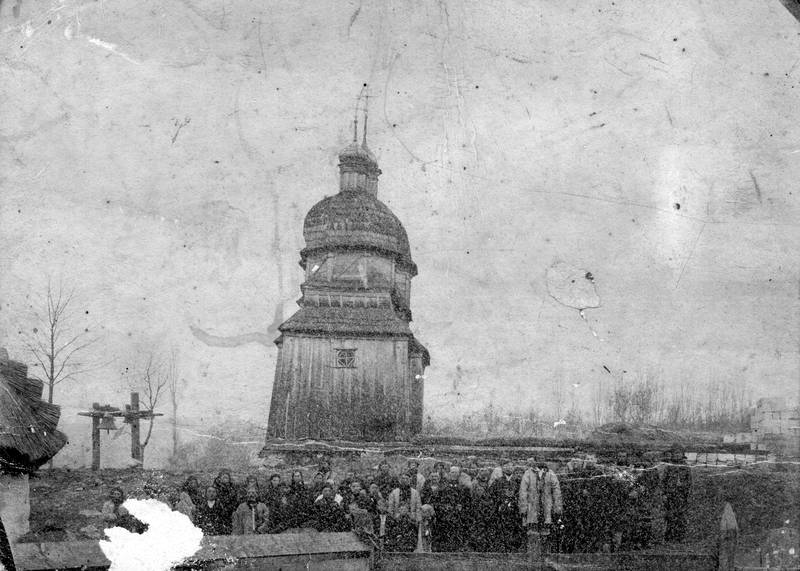
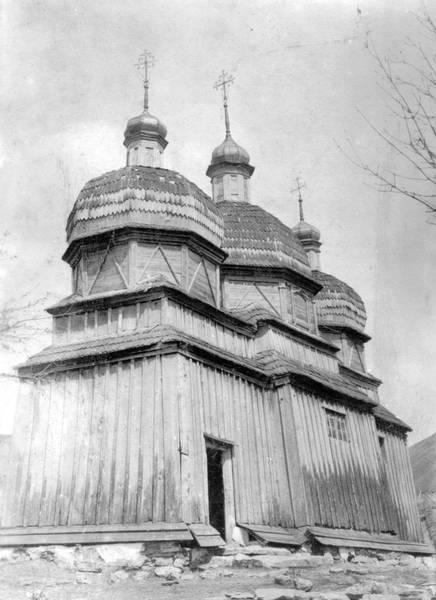
Photoes of Bakota's church:
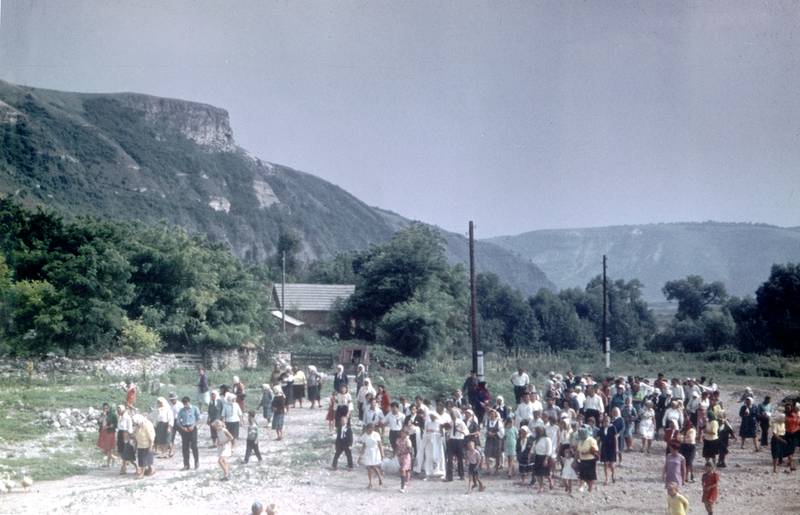
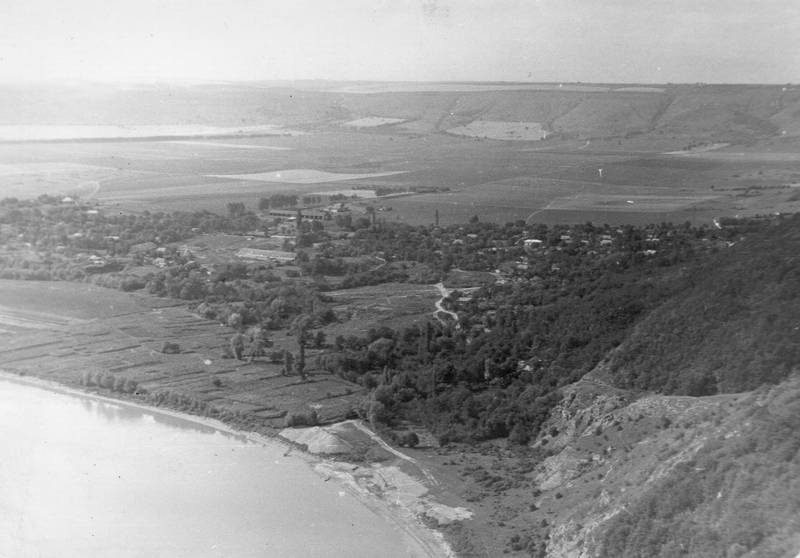
The village before flood:
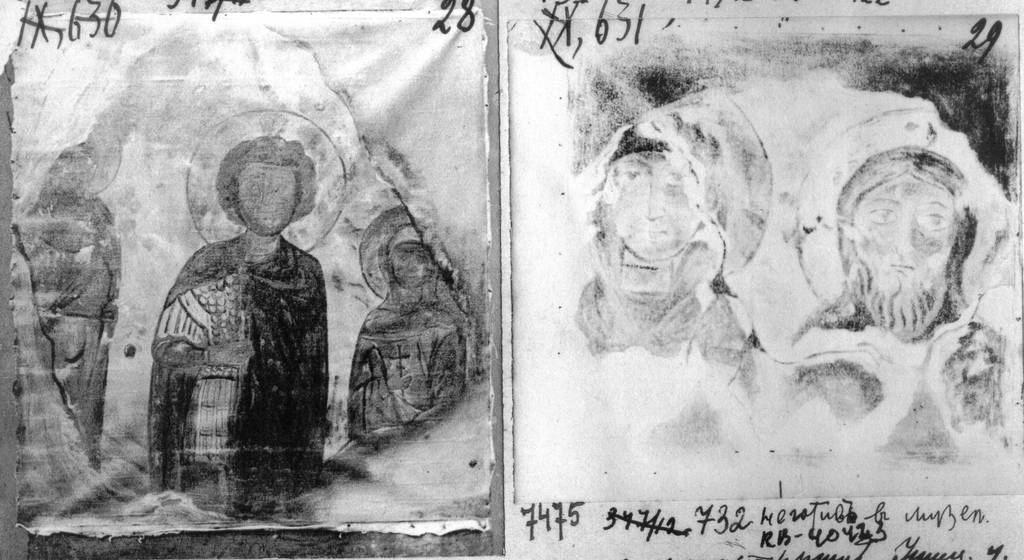
The samples of walls painting at Bakota cave monastery:
All the photoes are kindly supplied by Bakota ex-villager
Taras Gorbnyak, who published the book about the village named "��������� ����"
("Flooded fate").
But, without regard to all history processes which took place on territory of Podillia, Bakota village and surrounding neighborhood continued to exist. The stories of old-timers of village, some history facts, allow reproducing history of village of 20th - end 70th of �� century.
October revolution did not bring stormy events and special changes in Bakota. The Squire K.Shimanskiy, that behaved to the number of poor squires and was without family, drove out in unknown direction. On March, 7, 1923 districts and volost are liquidated in Ukraine, districts and regions are formed, in particular Kamyanes-Podilskuy district in composition of 17 regions. Bakota entered in the complement of the Staroushiskiy district. But the labor on land remained one way to survive. As well as everywhere on Podillia, in 1929 - 1930 years there is collectivization as a result of which in Bakota the first collective farm is formed named after Kalinin. The chairman of collective farm became Grinchuk Moisa from village Teremsy. Together with collectivization making people poor came to the village, that the forced taking away of property of rich peasants in a collective farm with a next deportation in the distant, cold edges of Siberia and North both lonely economies and whole families. But misfortune, as people said, does not come along. As a result of events of 1918 year Besarabia departs in the complement of Romania, and the river Dnister becomes boundary. Bakota becomes a boundary village. Boundary mortgages get organized, even in Bakota, which impose thought that after a river is enemy. Border guards at night and in the day-time control every step of habitants of village: entrance to Dnister - only in certain days under surveillance of border guard, to pasture a cattle on shore - it is forbidden, to look at that side of bank - it is forbidden, to process a vegetable garden only the back to the river, hanging out washed bright cloth on night is forbidden, in a night-time the light in the windows was forbidden, the obligatory passport system is entered. Opposite a village on shore of Dnister building of stone wall begins with a height 2m and borderland, which by forces of habitants of village and surrounding villages is finally completed to the middle of 30th. The secretary of CC CPU Hruschov and secretary of defense Timoshenko arrive for the control of "boundary on a lock", as wall was named. New build school opened in 1934, which was primary to 1941 year. Already at new school, instead of on an old mortgage the first teachers such as Dereviachuk Gnat and Marsenkivskiy Grigoriy teach children. A village soviet gets organized.
Hunger of 1933 year went round Bakota. Life seethes in a mud flow. Instead of old wooden church of Pokrova of St. Bogoroditsa the new stone is erected. By that time rebuilt and sanctified in 1893 rocky spelaean St. Mihailivskiy monastery stops to operate under prohibition of authorities and border guards.
Than reed-clarinettist Varvaruk Yhim known on all region organizes dancing ensemble which will popularize the "Varvarka dances", "Oira", "Liandra", not only in a surrounding district, but also rides to Moscow and Kiev with them, as the best ensemble of the district. An ensemble consisted of 4 women and 4 men, accompaniment is Varvaruk Yhim on a clarinet.
The events 1937-1938 years were designated on the Bakota history. A village fell silent as though, hid, but lives. Any word, any act and simply slander become the reason of exposure of "enemy of people". Without trace, without cause and on given time it is the "enemies of people" disappear unknown, and in actual fact good, honest owners and activists of village. At the same time fight against "opium for people" - religion led to destroying not yet finished building church.
In 1940 in communication with joining of Bukovina to Soviet Union a village stoped to be boundary. But already in 1941 war began. Battle actions were not present on territory of village. The best young boys go to front and 48 from them do not come back home from the battle. Liberation of edge from the German invaders saw only the habitants of village on an endless line that stretched from Old Ushisa to the village Studenitsa through Bakota and heard shots from the cannons of tanks on a mountain near Studenitsa during the ferriage of Germans through Dnister.
1947 year as year of hunger became especially tragic in history of village. For a year more habitants of village die of hunger, than perished in the war-time for 4 years and 10 months.
But also this heavy year did not destroy the will of people, did not break of their habit to work near native land. In 1954 there are neighboring collective farms named after Kalinin of Bakota and "Way of Lenin" of village Teremtsy unites in one -"Way of Lenin". Village Soviets unite in the same year. On May, 7, 1957 on the basis of this collective farm and collective farms of the villages sach as Stara Yshusa, Kruvchanu, Goraivka, Konulivka, NAddnistranka, Studenitsa appears state farm which stretched growing medical plants named after Ordgenikidze. And products - are the camomile crushed, calendulas, poppy, goose-grass, marsh mallow, pepper and other - go to the necessities of medical industry.
And area of #3 of Bakota becomes the unchanging leader of growing of medical raw material of state farm. Land generously thanks to the workers for selfless labour, and a government rewards the whole row of workers by orders and medals.
After war again school is opened, but already septennial, and habitants of the neighboring villages Goraivka, Naddnistranka, Teremtsy go to acquire knowledge here. The museum of history of village, library, new club, the preschool, shop is built, economy to the area broadens.
But already in 60th on a village there were rumours about the possible submergence of village in connection with building of the hydroelectric power station on Dnister. At the beginning of 70th the fate of village was decided forcedly and simply: building will be and people must be evicted. It became another stage of tragedy of Bakota. Habitants divided into 4 groups: one purchased dwellings in different surrounding villages and moved there, the second began building in Kolodiivka village, third - in Goraivka, fourths - in Stara Yshisa. It is impossible to describe that heavy load on building of dwelling and work in a state farm simultaneously, which was taken by the habitants of the village. The village became empty, and soon was destroyed. Filling of pool by water began from 1981 year.
Already for today there is not on the map Bakota, Teremtsy, Studenitsy, Kolunivka, Naddnistranka nor other Prednistrean villages. Only a signboard on the bus stop "Bakota" as mocks at the broken fate of thousand habitants of this village and other flooded villages. A "gold valley"- Bakota- disappeared from the face of earth, where only 2 weeks ago gardens flowered and bread ripened.
But to speak about Bakota village and to say nothing about a spelaean monastery it means say nothing. Their fates are linked forever.
As it is already reported earlier, the first mention about a monastery belongs to 1362 year, when Lithuanians arrived to Bakota and saw monks in rocky caves. From an annalistic text swims out, that a monastery in Bakota existed long before the Koriatovuchy's arrival.
The place of location of rocky monastery is related to the natural boundary "Monasturskiy", which well knew to peasants at the end of the ղ� century and was saved in the folk memory through whole ages. V.Antonovich arrived in 1883 to Bakota and began excavations of burial mound embankment. Local habitants told him about place of location of natural boundary, and also legends and translations. A scientist conducted the inspection of natural boundary.
A bishop Podilskuy and Bratslavskiy St. Dmitro visited Bakota in 1889. He walked up the top of mountain, examined a natural boundary and in circulation to the local peasants defined that in this place there was a monastery in rocks, that recluses were rescued in it when Bakota was the capital of Ponussia. It became a shove for conducting of excavations. At first the source was dug and ordered. And not far away, on height of 70m above a water level, during clearing of steep slope was pushed on tailings of Mir. This was the first success. In 1891-1892 years following the instructions of the Imperial Archaeological commission V.Antonovich conducted excavations, where tailings of rocky spelaean monastery were relief certain. Three caves of a different configuration are opened. The first cave was sizes 8,5 � 1,6 � 2,13, second - 6 � 1,5 � 2,13 �., third - 10 � 1,7 � 1,77 �. 17 prolate niches is beaten in the walls of corridors, by length 1,6-1,9 �, in the floor of caves - 19 niches, in some of them exposed human bones which lay out of anatomic order.
Near the entrance to the monastery on a south wall the inscription, executed by regulation by a slavonic cyrillic alphabet letter, is exposed: "Bless Crist Grigoriy igumen, given force to the saint Mikhail". Later above this inscription someone beat other inscription: "Grigoriy built this place".
The indicated inscriptions enable to date a rocky spelaean monastery. In 1962 Bakota was visited by the academician M.Tuhomirov, he familiarized with inscription and came to conclusion, that inscription is dated by the end ղ - beginning ղ�century.
Unfortunately, finds of the Bakota monastery on was saved. There are only descriptions of finds in the Y.Sitsinskiy labours, which ground to assert that frescos on their maintenance are artistic implementation and fully answer the high level of the fresco painting of ղ�-ղ�� century, and thing finds tell about the high level of Bakota development and whole region by that time.
The question of origin of rocky spelaean monastery is very important. After Melnik's conclusion, which inspected surroundings of monastery, a natural boundary, where a monastery is located, carries tracks of two different cultures - heathen and Christian one. The same was confirmed by the results of excavations in 1961, 1963 and 1964 years of sacrificial places - in a cave near monastery, in natural boundaries on Kluni and Pushkarivka.
It is possible to assume that Bakota's friary was devastated and fraternity is dissipated after 1434 year. Monasterial monastic cells, caves obviously, were empty during long period. After many years passed the collapse of overhead rock happened and hid under itself tailings of monasterial buildings. In 1893 in place of the Old Russian church of the Bakota's monastery a new wooden church was built in honor of Vsemilostevuy Spas and sanctified on August, 1 (on August, 14 on a new style), the same year by a bishop Podilskuy and Bratslavskiy St. Dmitro. The habitantsof Bakota built a church. So the Makovey (on August, 14) holiday became another holiday in the village.
Such a monastery was to 1918 year. Since then in connection with that it was close from boundary, mass arrival of people was forbidden there, that was controlled by border guards. Wooden constructions of church began to rot. Before war (in 1940) for building of mortgage a plenty of materials was accumulated in Bakota. But it was not already needed to build a mortgage, all materials are decided to expend in renewal of church of monastery. Work was conducted by all villages - so called toloka. Gorbniak and Melnuk became initiators. People worked inspiredly and gladly, because they rebuilt in the sacred object.
On August, 14, on Makovey, all over Ukraine water, flowers was sanctified. In that day Bakota became the place of collection of many thousand people which alone or groups from Bukovuna and Podillia overcame ten, hundred kilometers. Much from them came for a week, two to the holiday. It was impossible to place people in dwellings of owners and many of them were disposed under the opened sky in the village, on shore of Dnister, on a path to the monastery. They visited a monastery, prayed sincerely. The patients people picked flowers and herbages, bound in pinches (named them makoveiku) and took away home, believing in healthful force of herbages and water from sources near a monastery. Old men, cripples, kobza-players came here, what told legends, translations, told the poems �.�. Shevchenko. To beginning of holiday a large fair, which the products of the fields and gardens, other commodities were for sale on, settled down in Bakota. So most demand was had icons, daggers, beeswax, child's funs.
And already on August, 14 early in the morning holiday began. By a continuous stream arriving and local habitants went by a narrow path to the monastery. About 20 priests from surrounding villages conducted service, water and flowers was sanctified. After service local habitants invited the relatives, acquainted, arriving on festive dinner which was necessarily lean.
But it was not so long. At the beginning of 60th the duty wave of fight against religion passed on a country, and a monastery is closed. In 1963 Minster collapses again, wooden materials either is burned or is brushed off in a precipice to Dnister. Icons, a present library are destroyed, crosses brush off in a precipice, and church ringing disappears. There were only the caves of monastery as mute witnesses of those distant and near times.
How we see, history of village was forged in prosperity and being in need, splashes and falling through whole ages. And it educated brave, good, hard-tempered, industrious people which created this history.
One of the most famous metropolitans of Russian earth, Kiev metropolitan Kurilo (Cyril ��), for pious life is included to the face of saints, on the testimonies of historian, was born in Bakota.
Faina Miller, known all over the world as world champion discus thrower of 60-70 years, was born and spent her childhood in Bakota, today she lives in Moscow.
And in 60-70th the brigade �1 area �3 of Bakota were the best in growing of medicinal matter in a state farm named after Ordzenikidze and in the ministry of medical industry of USSR, which was managed Varvaruk, after that he was present with order of Lenin and two orders of Labour Red Flag, many medals.
It is only some features, and it is possible to say with safely, that much of them got lost in grey fog of ages.
�� ����� �� ������� ���� ����. ���� ������� � ����������� ����� ������� ��� �������� ����. ���� ����� ����, �� ������ ������������� ����� ������� ������ ����. � �� �� ��� ��� ���� �������� ����� ��������� �������, ��������� ���'����-����������� ������ ����� ���� ������ ����� ���� � ��������� ��������� 40 ���� ����.
�� ��� ����
�� �����, ������,
�� ����볅
- ��� ����, ����� ��� ���� -
� � ���� -
��� ����� � ���������� � ����,
���� ������ ������ ��� ������,
���� ������ � �������� ���,
�� �������� ������ ������ -
�� ������ - ����� - �������� ������.
��� �� ����� ���� ����
���� ���� � ����������� �����,
� ���� ������� �������� ����
��� ������� ������ ���� �� �����.
������, �� ���� �� �� ������,
�� � ���� ������, ���� � �����
� ��������������� ��������� �������
���� �������, ���������� ������
�����. � ������ ��� �� ������
� � ����� ����� ��� ��������.
�� � ������, ���� �� ����� ������,
�� � ��� ������ � ������ ����.
� ���� ������ ��-��-�� ��� �����
��� ������ ���, �� ������� ������.
� �������� ���� ����������,
��������� ������� �� �����.
� ����, � ������� ��� -
� �� ���� ���� �����������.
� �� ������ ���� ��'�����
� ������� �����. ������ �����������, -
ͳ, �� ���� �����, ������ �����
�� ���� � ������ ��������.
�, � ��� �������� ������,
� �� ���� ������ ���� �����,
�� ������ ����������� �� ���
� ����� ��� �������, ���� �������,
���� � ��������� ������ ����� �����
� ������� ������ �����'�,
���� ������� �� �������� �����
��������� �������� �������,
�� � �������� ����������� �����
ϳ����� �������� ���������.
�� ����� � �� ��� �� ���
� ����� �� � ���� ��������
� ��������� ��� �������� �����,
��� ����� ������, ��, ��� ����� �������,
� ������� ��� �������,
��� ����, ���� �'��, ����� ����
���������� ���������, ��� - ������,
Գ����� � ���������� ������.
���, �� ������ ������� �������,
����� � ������, � �������� ���,
� ���������� � ���� �� ����,
������ �������� � �������� �����.
���� ��������� � �������� � �����
��� ��������� ������ ����.
1962 - 1963 ��.
�.����� ����, ���. "������" 1987 �.
������ ������ ���� ���� ������ ������������� ����� ������.
� ��� ���� -14 ������ - ���� ����� ����� �������, ��� ������� ��� ������ �����
���'���� ������ � ���������� �� ��� ������ ����, �� ������� �� ������,
��� ��������� ���������� ������ � ���������� ����� ��������. ���� ����� ������
������ ����������� �� ����.
��� �. ��� ��� � ��� ����.
���� �������
"���'����� �� �����".
���. �, ������� 2001 �.
������
���� ����������� �� �������� ����, ������.
������� � ��� ���������� ����� ���������.
������� ������, �� ������ ����� ���������
���� �������� �� ������� ������� �����...
���� ������ ���� ��������� ����.
������ ������� ������� ������� ����'�...
����� ���'�� ���������� ������� ������,
���� ��� ��������� ���� �� �����.
���� ������� ������ ��� ������ ��������.
��������� �������, ������ � ������ �������.
������ ��� ��� �� ������ ���� ����� ����,
����� ���������, ������ ��������� ��������?
���� ��������� ���� ���� ����� �����.
�� ����������, �� ��� ������� � ���� �����.
���� �� ����� ����� ������� ���������,
������ ���� � ���������!
ҳ���� � ��'� ��� �� ���'�����, ������...
���� �����������. ����� ���������� ����,
�� �� ����� ���������� ������ ��������, -
������ ����� ������� ������ ��������, -
����� � ��'� ��� �� ���'�����, ������.